Showing posts with label Wales. Show all posts

Saturday, June 7, 2014

FO: Estonian Lilies of the Valley, A bit on the Wales trip, and A visit to the Fiberguild of the Savannahs show

I finally completed the first project in the "subcategory" (haha) of "Yarn Purchased in Wales in 2013." Why yes, as we all do, I subcategorize my yarn collection in my head.  


This is Lily of the Valley Lace Shawl  from Pam Allen's Lace Style.  ( I love the Pam Allen era Interweave Knits magazine and the fact that her beautiful daughter, Caitlin Fitzgerald, graces the cover of this book).  The pattern is of course a Nancy Bush Estonian-inspired creation.

The yarn is Collinette Jitterbug in Wasabi. While in Wales we visited Colinette's gift shop in Montgomery, and later her store (and dyeing facility) in Llanfair Caereinion, 
Powys, website here.

Here is a map showing Montgomery and Llanfair Caereinion, note where Welshpool is.
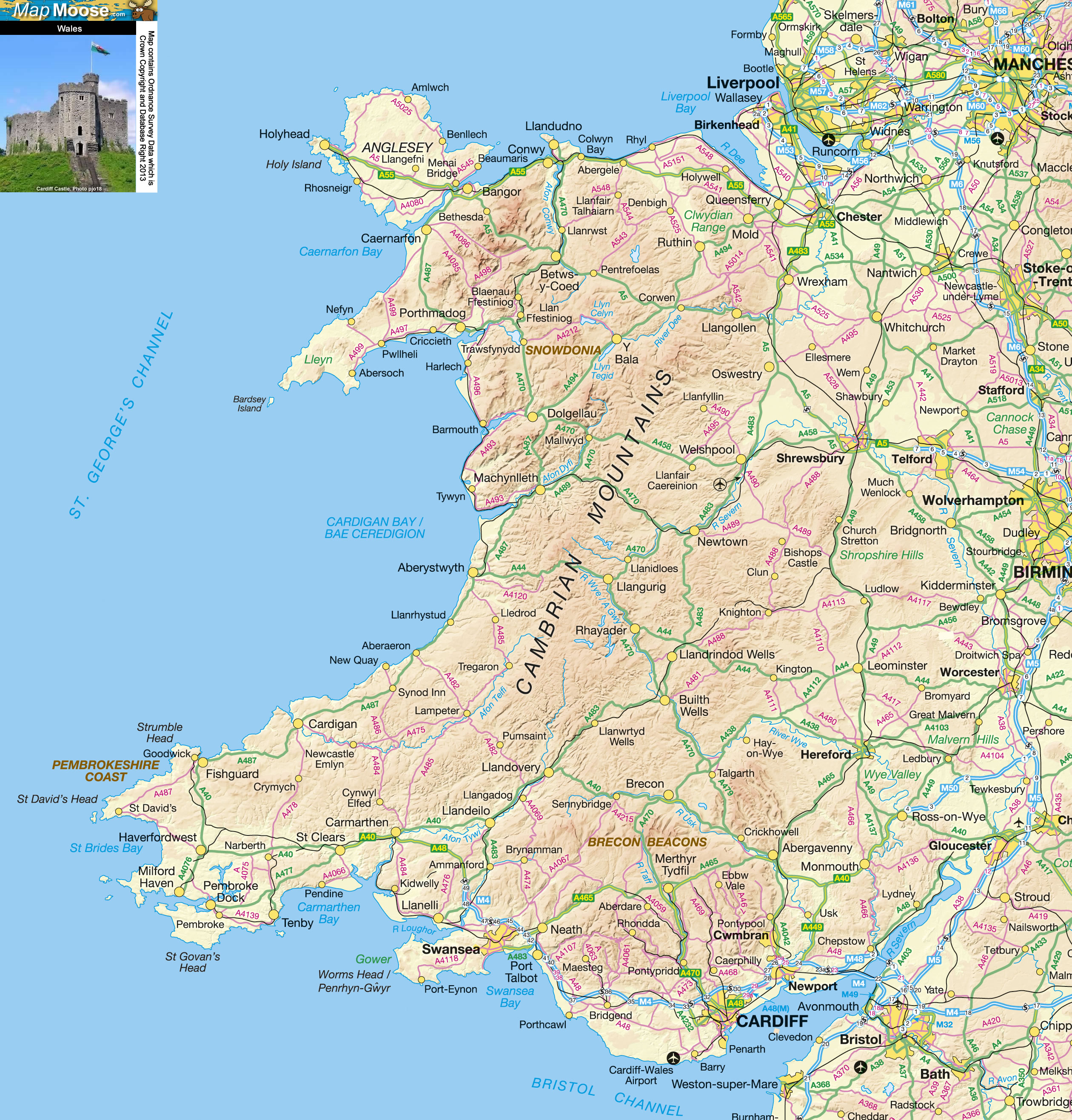

Above is a bigger map of Wales with Welshpool as your reference point; it's to the left of Shrewsbury. Yes, this is a hard-to-see map; Welshpool is just to the right of the "N" in "Cambrian Mountains" if your'e interested.

Below is the store front of Colinette's gallery in Montgomery


Here is yours truly at the top of the street in Montgomery…on fiber vacation, what could be better??


And here is the storefront of Colinette Yarns in Llanfair Caereinion


The store held a riot of colorful yarns, but I loved the soft spring green of the Jitterbug Wasabi, so appropriate for the lily of the valley pattern. 

A bit closer to home, the Fiber Guild of the Savannahs held their annual show at  the Coastal Discovery Museum close by in Hilton Head.  It was titled "Fibers Glorious Fibers!" and I went to have a peek.  I did not take photos of works of art as I did not have artists' permissions, but here are a couple of shots


I love all antique spinning wheels


Here is the handwoven finished product from the "Sheep to Shawl" that I viewed the weaving of in Savannah two months ago…

On the garden front, one of the mulberry trees that I got as a birthday gift was settled from the pot into the yard last fall.  I may never have silkworms to feed it's branches to, however it's gift to me was is the first year of berries, perhaps my reward from liberating it from it's way outgrown pot!


Saturday, June 29, 2013

Wonder Wool Wales 2013!

I am five hours away from the closest sheep and wool festival, so I was delighted that Wonder Wool Wales was our first stop in Wales.  


Warning:  my photos were by and large quite lousy I don't travel with a computer for daily viewing and fixing..but maybe next time...

National Wool Museum Exhibit ...if you ever go to Wales I would HIGHLY recommend this museum which is in Dre-Fach Felindre, Llandysul, Carmarthenshire).


The Hattersley Domestic Loom (here's a nice read on this loom, while not a weaver I'm fascinated with this loom which I first met in Scotland on Harris)


Manx Loaghean


Wicker creations are local to Wales...this was a "weave some yourself" exhibit


This very talented woman was sporting a great hat which I got a very poor photo of...she felts birds and has added them to her chapeau...she gave me permission to feature this photo and her website ... of course I lost her card with her site information.  So sorry. 


Pembroke Poll Dorsets


Talis Kimberley, my new favorite fiber chanteuse (note the "Campaign for Wool" banner behind her)


Here's a youtube video of Talis and friends doing her big sea chantey style hit entitled "Can You Knit, Brave boys?"


Felting workshop (they will be mitts)


Fashion Show


Men in kilts and red tights 


And...the view behind the loo


Needless to say, I will be taking time off this year to get to SAFF in Asheville this year for some more local festivities!

Sunday, June 9, 2013

Welsh Stockings


Hello, are your feet warm?


Why yes, I went on a trip last month...I was lucky to be able to join Joyce James, fiber-purchase-agent- provocateuse on her journey to Wales, along with 13 intrepid fiber loving companions, one brave husband, and an intrepid coach driver. (In case you don't know, "coach" is UK and Canadian speak for "bus.")

The first post that I am inspired to do is on traditional knitting in Wales, of which, I don't believe, there is a tremendous history for my first interest...shawls.  I didn't happen upon any, although that's certainly not to says that shawl knitting didn't happen in times past in Wales.  If I were interested in hats, there is a knitted hat that supposedly originated in Wales, the "Monmouth Cap."  

 However, the  Welsh were well known for knitted socks or "stockings." Here is a lovely painting by William Dyce entitled "Welsh landscape with two women knitting" from 1860.


A bit of internet research turned up information from a museum that we visited,  Ceredigion Museum in Aberstwyth. This was a fascinating place, full of treasures from the past and located in a repurposed Edwardian era cinema.   Some highlights regarding socks from the this web page include:

Funeral stockings were commonly knit, very sweet with with bereaved's name knit into the stocking. 

Further digging at this website revealed another fascinating read by a woman named Sara Minwel Tibbott who was a writer and collector of information about domestic crafts The link is here. After more internet research (which I've decided that I might be kind of good at...) I discovered that the link is a chapter  excerpt from Sara's book,  entitled Domestic Life in Wales, which is a sweet read on daily domestic life in pre and just post industrial Wales. 

According to Sara, during the 18th and 19th centuries, knitting stockings (socks) were an important and sometimes (for single women) a primary income in households. Most women and many men when not doing other work had knitting in their hands.  Socks were then sold to individuals and at fairs, often to "stocking men" who then took their purchases to London.

Stockings used natural white at the top (the "welt") and toe. Colored or dyed yarn was used for the body of the stocking. Blue grey from the home dyepot was for men, women wore black stockings.

This cottage industry was outdated by the mid nineteenth century when the railroad allowed quick transport of stockings and other knitted goods from the factories in England and Scotland throughout the UK, although of course home knitting lived on.

So of course, all of this left me in search of a pattern.

Here is a  photo of  Nancy Bush's "Welsh Stockings" and the Rav link to it below!  I plan to adapt a sock pattern to this color scheme...


http://www.ravelry.com/patterns/library/welsh-country-stockingshttp://www.ravelry.com/patterns/library/welsh-country-stockings

Monday, November 22, 2010

Biased Book Review: Running for the Hills

I have this absolutely misplaced feeling that I was meant to be a sheep farmer/angora bunny raiser/alpaca farmer/the list goes on.  I mean, come on, there was a sheep farm in my family five generations back?!  OK... I admit...it's not five direct generations. 


In that interest, I sometimes likes to read books about people-who-raise-fiber-bearing-animals.  And imagine in my misplaced way that I am one of them.  


I just finished the very well written (with intelligent humor) Running for the Hills:  Growing Up On My Mother's Sheep Farm in Wales, by Horatio Clare.


Couldn't find a  better image of the cover of the American edition, here's a photo of the British edition, slightly different title, depicting Horatio as an adorable towhead


Horatio's parents were from London.  It's the 70's, his mother Jenny wants a different lifestyle both for her and their children. They purchase a sheep farm in southwestern Wales, in the mountains near the Brecon Beacons mountain range.  Horatio's Dad does not share that vision, and he ultimately  returns full time to London, helping out occasionally.  Jenny is left raising two little boys, and and must work hard to sustain her family on the sheep farm.  She has help from Jack, a crusty and solid local retired farmer, along with other neighbors.


When they bought their farm, 100 sheep came along with it.  Horatio explains in the book that when a farm was sold, some sheep came along with it.  They had a number of breed in this original flock, mostly Welsh Mountain


which are small and hardy with thick white fleeces.  The majority of the rest were Suffolk crosses


Suffolks are black faced with thinner fleeces, had "bigger, more profitable" lambs, but these were less sturdy in the cold.  A few  other breeds were mixed in:  Badgers (a variety of Welsh Mountain), Radnors, and Speckles. 


Ram lambs are "tups," ewe lambs are "theaves." Tups were sold in their first nine months, preferably before winter to avoid feeding them when grass was scarce.  Yearlings were one year olds, mostly theaves, and were sold to farms looking to add to their breeding stock.  Their flock grows over the years.


Jenny has incredible affection for her animals; they are always fed and well cared for, unlike some of her farmer neighbors. She cares for them so much it's hard to believe that she sells them for meat.  


I emailed Horatio Clare via his website to ask him about the use of the wool.  He replied said yes, the farm did sell the fleeces:  


The story of wool in Wales is melancholy. Jack  recalled decades when it was still so valuable that the annual haul would pay a tennant farmer's rent for the year. By the time my parents got into it all the fleeces from every farm were bought by the Wool Marketing Board. You had to make sure there was no bracken or hay in it, and not too many dags, and that the sacks were sewn up in the approved fashion. In return for this they sent you a cheque, for a fixed sum per sack. The rate declined steadily with the market for wool. Sometimes there would be a spike - a particular fashion season would bump up prices - but now the cheques barely cover the cost of the shearing.

The Wool Marketing Board still exists, and the system continues as it did. They drop off new sacks each year, and still collect the valley's output from the farm where it has always been assembled. On occasion, when Mum has a particularly beautiful fleece, she holds it back to give to anyone who might appreciate it. There are rumours that it might make a comeback as an excellent source of insulation - but I fear man-made fibres are always going to be cheaper. 


As the boys age, Jenny decides to sell the farm and move to  local town.  She may still be keeping some sheep!


I know from everyone's  favorite knitting podcaster, Brenda, there there are still woolen mills in Wales operating today, and perhaps they were in the 70's, but of course the scale is nowhere what it was 100 years ago.  I hope Brenda has read this book.  Interestingly, she also lives in Pembrokeshire, the setting for this memoire.  Pembrokeshire looks pretty blowy and cold, sticking out in to the  sea like that.


Interestingly, my favorite knitting tour guide, Joyce, is leading a tour to Wales in 2011, which includes Pembrokeshire. I won't be joining in, at least not in 2011.


Horation Clare's website is: http://www.horatioclare.co.uk/ Do visit, he's published two other books since.


The British Wool Marketing Board is here.